
THE STUPP PROTOCOL
The Stupp Protocol:
Current Standard of Care for Glioblastoma
The Stupp Protocol is the globally accepted standard treatment pathway for newly diagnosed glioblastoma (GBM). It combines surgical resection, radiotherapy and temozolomide chemotherapy to extend survival and delay tumour recurrence.
What does the Stupp Protocol include?
The Stupp Protocol is typically delivered in the following sequence after surgery.

Surgery
Where feasible, maximum safe resection of the tumour is performed to reduce tumour burden.

Radiotherapy
External beam radiotherapy is delivered as 60 Gy in 30 fractions over 6 weeks.

Temozolomide (TMZ)
Oral temozolomide is given daily during radiotherapy and then continued as adjuvant therapy for up to 6 months.

Current Limitations
Despite being the standard of care, outcomes for GBM patients remain poor.

Limited survival benefit
Extends median overall survival by only ~2-3 months.

High recurrence rate
Tumour recurrence within 2 cm of the original site is common.

Side effects
TMZ can cause nausea, convulsions, lymphopenia and other toxicities.

Delivery challenges
Systemic treatmemts have limited penetration across the blood brain barrier.
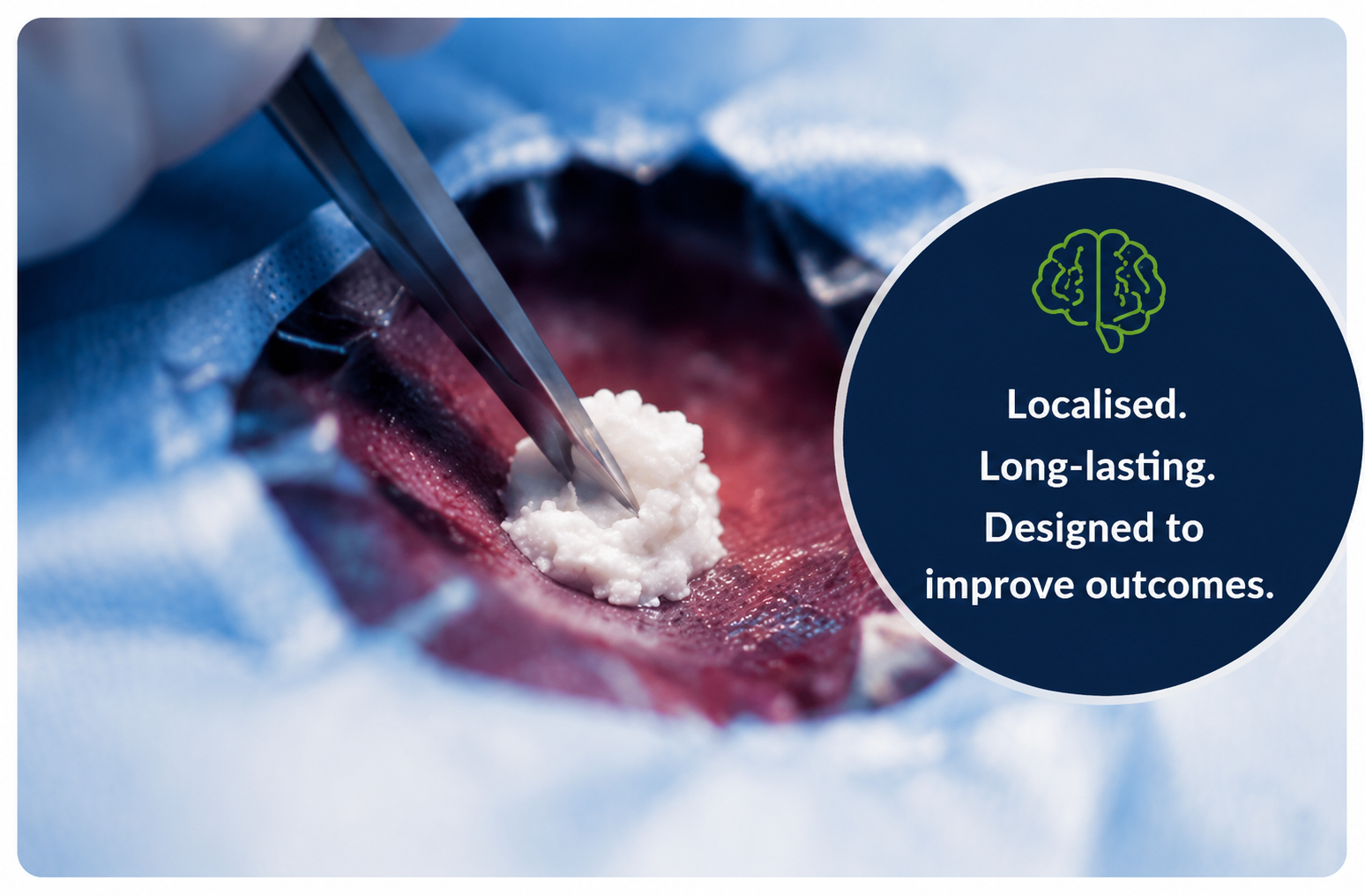
Knoxyl: A localised adjunct to the Stupp Protocol
Knoxyl is a bioresorbable paste applied directly to the tumour resection bed at the time of surgery remains active for up to 28 days, delivering sustained local activity at the margin where recurrence most commonly occurs.
